
How HVAC Dispatch Automation Works
Running an HVAC business means making fast decisions all day: who should take the next call, which technician is closest, whether the customer has an active service agreement, and how to keep the schedule moving when an emergency comes in.
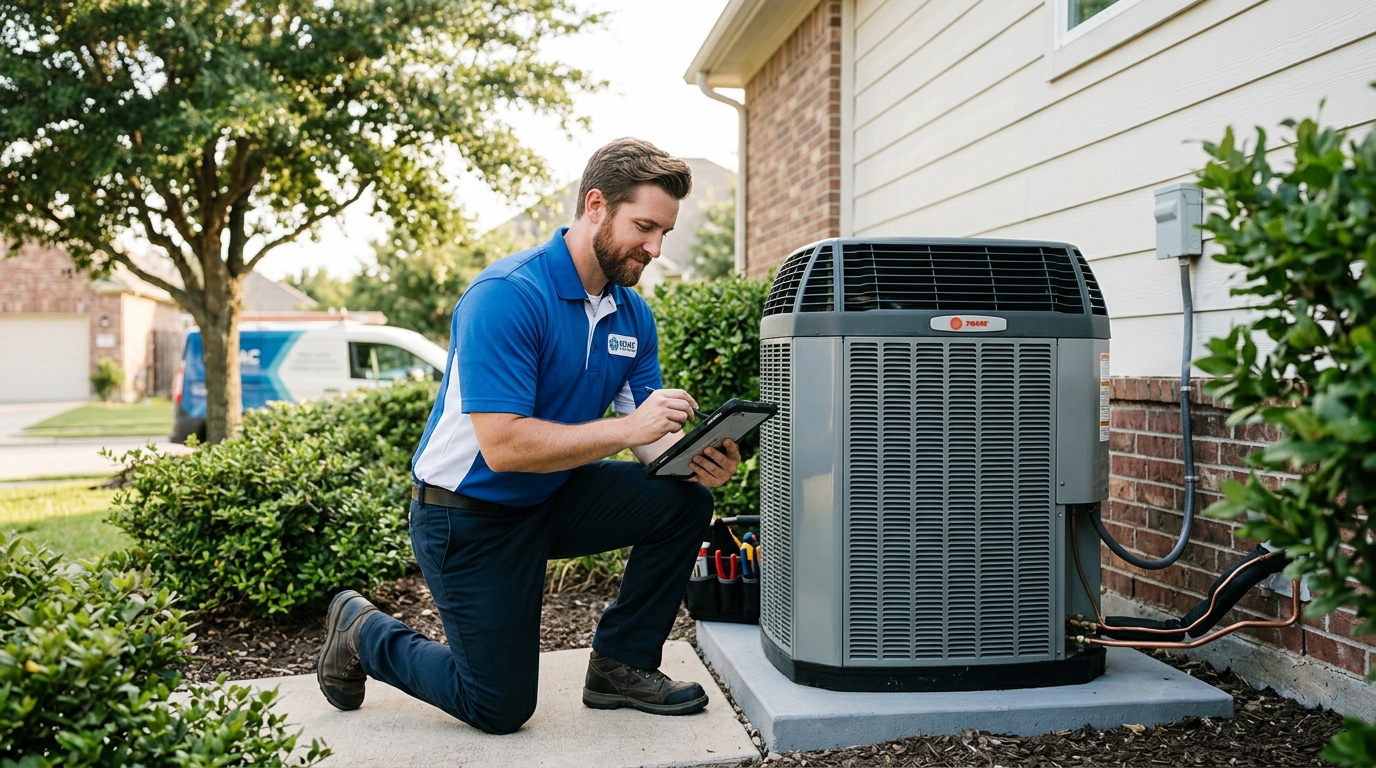
HVAC dispatch automation helps handle those decisions automatically. Instead of relying on manual phone calls, spreadsheets, and constant schedule changes, it uses connected software to route jobs, notify technicians, update customers, and keep your team informed in real time.
What is HVAC dispatch automation?
HVAC dispatch automation is a system that streamlines the journey from a customer request to a completed job.
When a new service request arrives—through a phone call, website form, chatbot, or customer portal—the system can collect the details, categorize the issue, check technician availability, and recommend or assign the right person for the job.
The goal is simple: reduce admin work, shorten response times, and help technicians spend more time serving customers.
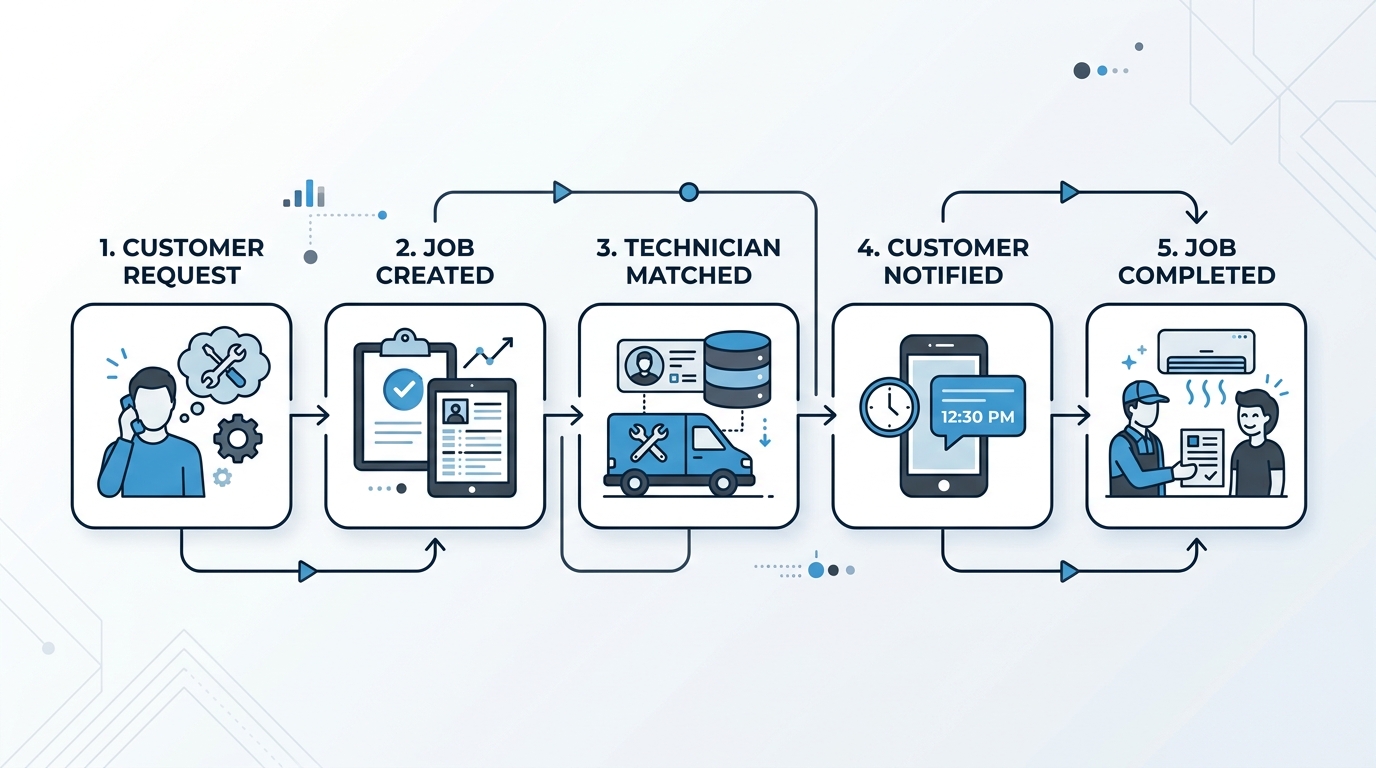
How the process works
1. A customer request comes in
A customer calls about a faulty AC, submits a form online, or sends a message after hours. Automation captures the important information right away, such as:
- Customer name and contact details
- Property address
- Type of HVAC system
- Reported issue
- Urgency level
- Service-plan status
- Preferred appointment time
This removes repetitive data entry and makes sure the office has the details needed to act quickly.
2. The request is categorized and prioritized
Not every request needs the same response. A routine maintenance visit should not be handled like a no-cooling emergency during a heatwave.
Dispatch automation can apply rules that identify priority jobs. For example, it may flag a request as urgent when the customer reports no cooling, a gas smell, a water leak, or a system failure at a commercial site. It can also prioritize customers with maintenance agreements or VIP service plans.
This gives dispatchers a clearer view of what needs attention first.
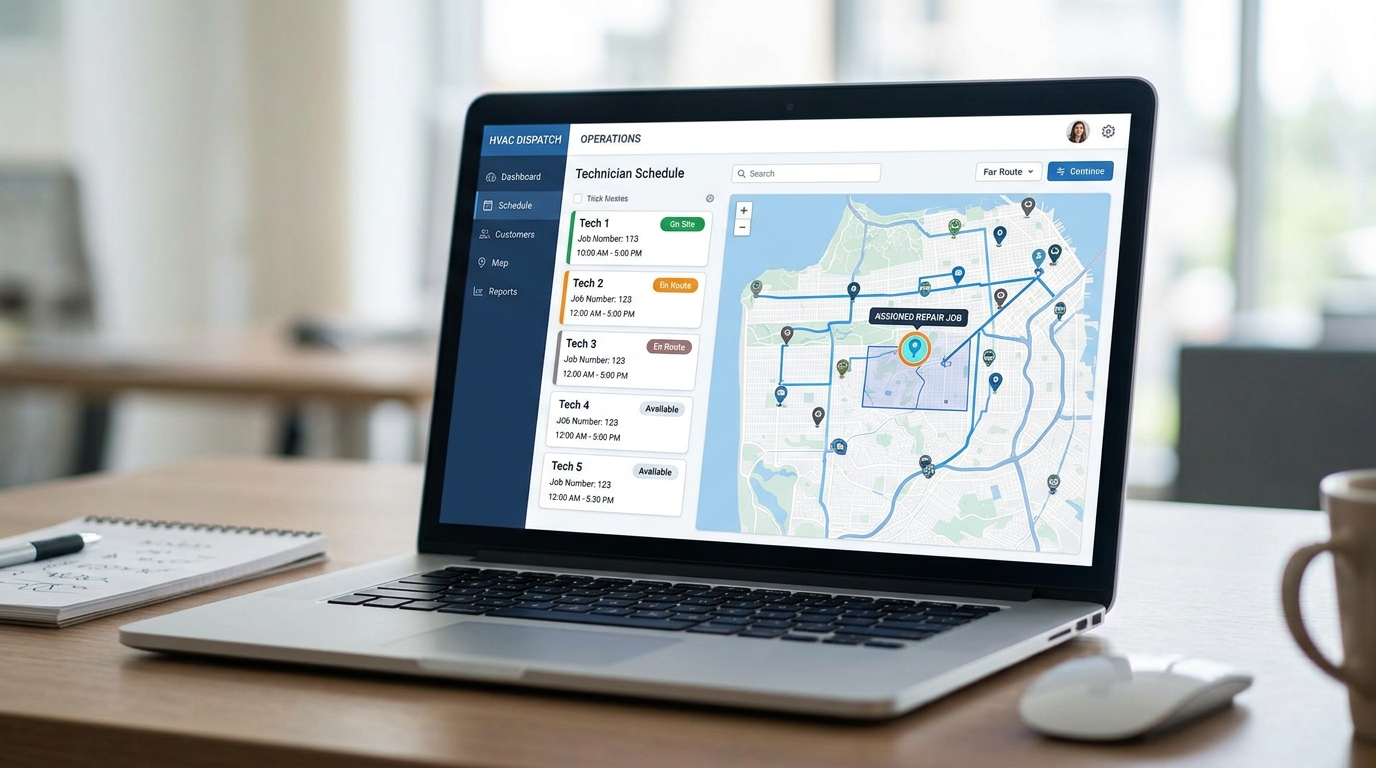
3. The best technician is assigned
This is where automation creates the biggest operational gain. The system can match the job to a technician based on factors such as:
- Skills and certifications
- Current location
- Availability
- Existing route
- Job type
- Workload
- Customer preferences
For example, a refrigeration specialist can be assigned to a commercial cooling issue, while a nearby residential technician handles a standard AC repair. Rather than manually checking every schedule, the dispatcher gets a smart recommendation or an automatic assignment.
4. Everyone receives instant updates
Once a job is assigned, the system can automatically notify the technician and customer.
The technician may receive the job details, address, equipment history, notes, and navigation link through a mobile app. The customer can receive a confirmation message, appointment window, technician name, and an arrival update.
These automated communications reduce missed appointments, eliminate unnecessary follow-up calls, and create a more professional customer experience.
5. The technician completes the job in the field
From the field app, technicians can update the job status, add notes, upload photos, collect signatures, create estimates, and process payments.
As soon as the job is marked complete, the office has an up-to-date record. The system can then trigger the next steps automatically, such as sending an invoice, requesting a review, scheduling a maintenance reminder, or notifying the customer about recommended repairs.
Benefits of automating HVAC dispatch
The right dispatch automation setup helps HVAC companies:
- Respond to urgent jobs faster
- Reduce scheduling mistakes and double bookings
- Cut down on administrative workload
- Improve technician utilization and routing
- Keep customers informed without extra calls
- Create better job records and reporting
- Increase the number of jobs completed each day
For growing HVAC businesses, the value is not just speed. It is consistency. Every customer receives a smoother experience, while the team works from one reliable system instead of juggling calls, messages, calendars, and paper notes.
Automation still needs people
Dispatch automation does not replace a skilled dispatcher or service manager. It gives them better information and removes repetitive tasks, so they can focus on exceptions, high-priority jobs, customer relationships, and business decisions.
The best systems use automation for routine workflows while keeping people in control when judgment matters.
Ready to streamline your HVAC operations?
A well-designed HVAC dispatch workflow can turn a busy, reactive schedule into an organized system that keeps jobs moving and customers informed.
If your team is still managing dispatch manually, automation can help you reduce delays, improve communication, and scale service without adding unnecessary admin overhead.