
How to Automate Insurance Renewal Checks
Insurance renewals are easy to overlook, and costly to miss. Whether you manage personal, commercial, health, motor, or property policies, staying ahead of renewal dates is essential for protecting clients, preventing coverage gaps, and retaining business.

The challenge is that manual renewal tracking often depends on spreadsheets, inbox reminders, and someone remembering to follow up at the right time. Automation makes that process more reliable.
What are insurance renewal checks?
Insurance renewal checks are the steps taken before a policy expires to confirm whether it should be renewed, updated, replaced, or cancelled.
A proper check may include reviewing the renewal date, policy details, premium changes, client information, claims history, and any changes in risk. The earlier this happens, the more time there is to give clients clear advice and avoid last-minute decisions.
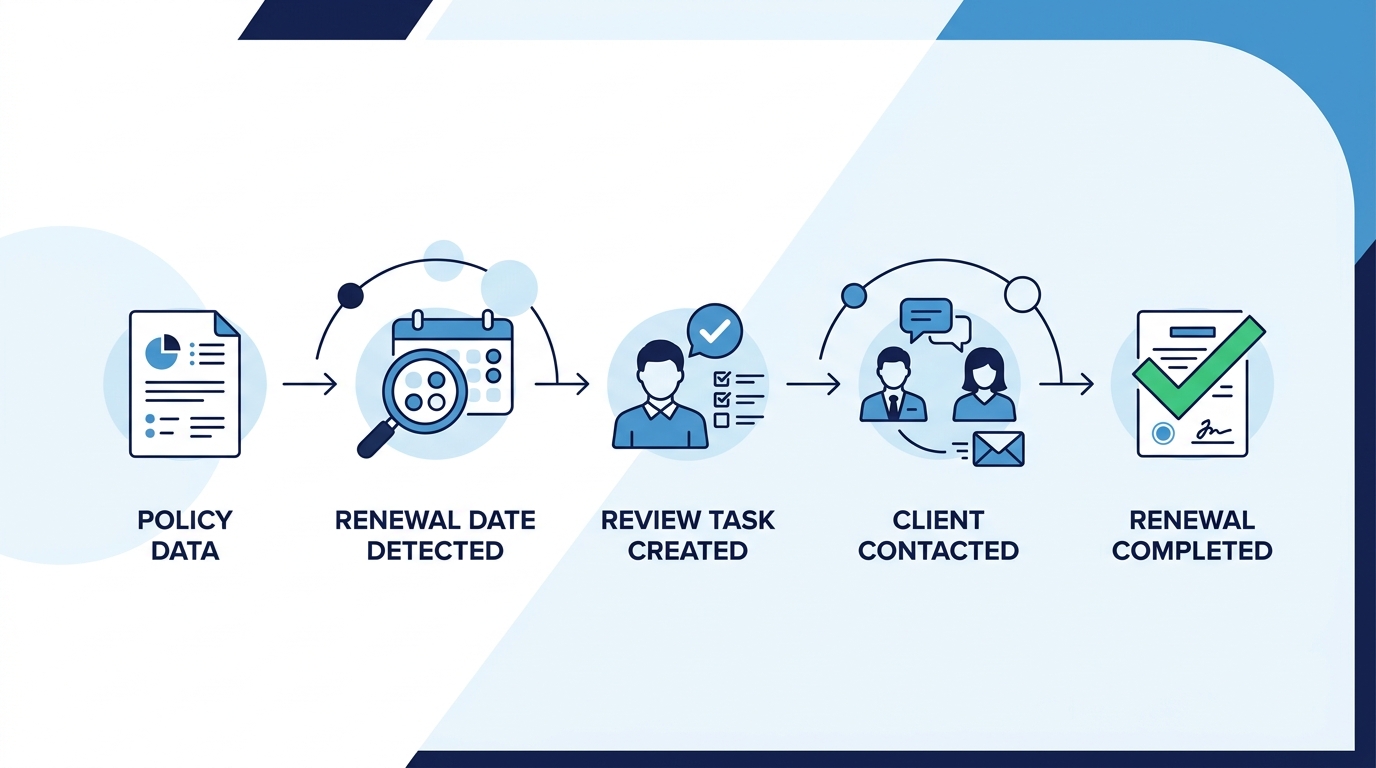
How insurance renewal automation works
1. Policy details are stored in one place
Automation starts with accurate policy records. Each policy should have key information such as:
- Policy number
- Policy type
- Renewal or expiry date
- Client contact details
- Insurer
- Current premium
- Assigned adviser or account manager
- Notes about coverage, claims, or special requirements
This information may come from a CRM, policy-management system, spreadsheet, form, or connected database.
2. The system detects upcoming renewals
Instead of checking renewal dates manually, an automated workflow checks policy records on a schedule.
For example, it can identify policies expiring in 90, 60, 30, 14, or 7 days. When a policy reaches one of those milestones, the system triggers the appropriate next step.
This creates a consistent renewal process and reduces the risk of policies slipping through the cracks.
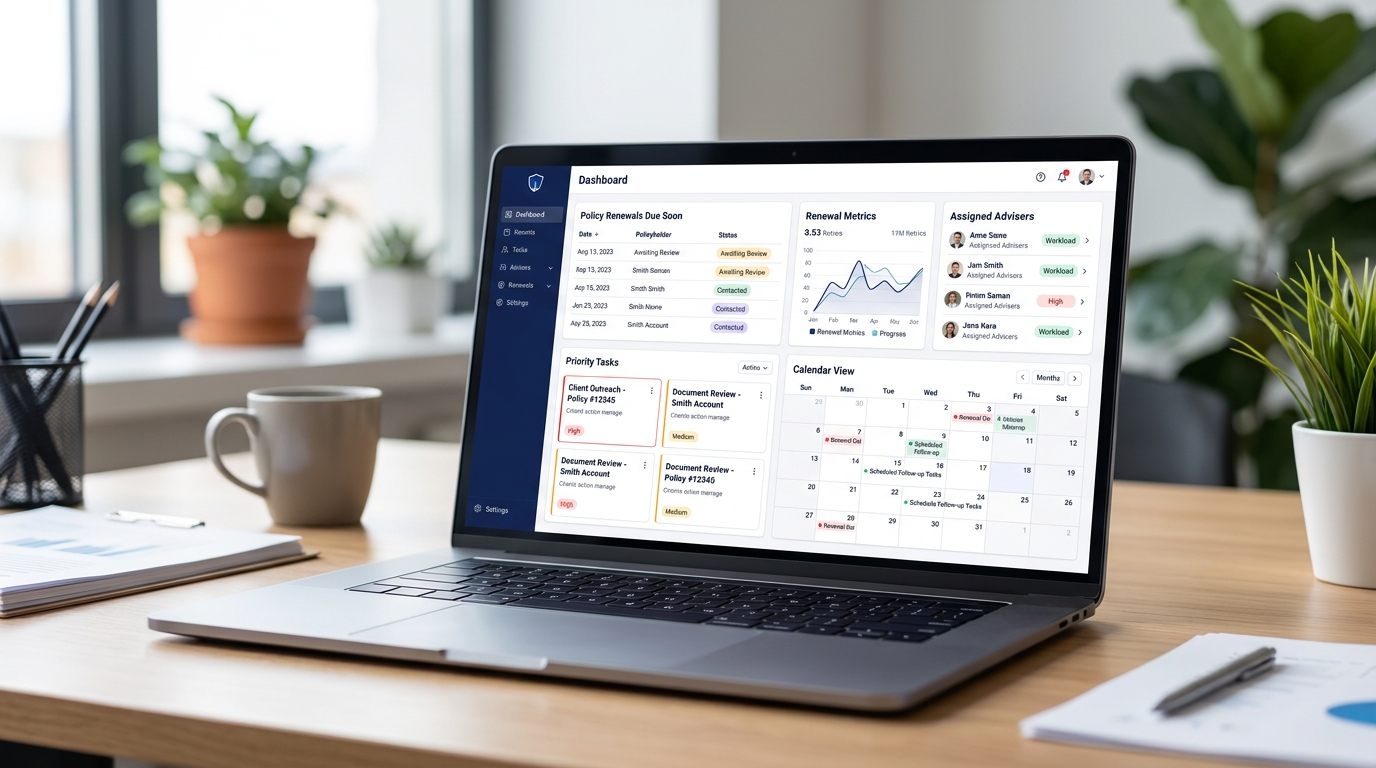
3. A review task is created automatically
Once a renewal is approaching, the system can create a task for the assigned adviser or account manager.
The task can include the client’s details, policy information, renewal deadline, and a checklist of what needs reviewing. High-value accounts, complex policies, or clients with prior claims can be automatically marked for priority attention.
4. Clients receive timely reminders
Automation can send personalized emails or SMS messages at the right time. A client might receive an initial renewal reminder 30 days before expiry, followed by a follow-up if no response is received.
Messages can invite the client to confirm their details, upload documents, book a review call, or approve a renewal quote. This keeps communication timely without requiring the team to send every reminder manually.
5. The workflow follows up automatically
A good automation does more than send one message. If the client does not respond, it can trigger a follow-up reminder or notify a team member to call.
If the client completes a form or books an appointment, the automation can update the record and stop unnecessary reminders. If a policy is renewed, it can mark the task complete and schedule the next renewal cycle.
What should be checked before renewal?
Automation helps make sure the right checks happen consistently. Depending on the policy type, a renewal review may cover:
- Changes in the client’s address, assets, business, or circumstances
- Updated sums insured or coverage limits
- Premium changes
- Claims history
- New risks or exclusions
- Supporting documents that need updating
- Whether the current policy still meets the client’s needs
The workflow can collect routine information automatically, while the adviser handles the professional review and recommendation.
Benefits of automating renewal checks
Insurance renewal automation helps teams:
- Reduce missed renewal dates
- Protect clients from accidental coverage gaps
- Improve response times
- Keep renewal activity organized
- Save time on manual reminders and data entry
- Improve retention through proactive service
- Give advisers a clearer view of their workload
Most importantly, it creates a better experience for clients. They receive relevant reminders early enough to act, rather than being contacted at the last minute.
Automation supports better service
Renewal automation is not a substitute for professional advice, compliance requirements, or human judgment. It handles the repetitive tracking and communication tasks so insurance professionals can focus on reviewing risks, advising clients, and building stronger relationships.
Ready to simplify your renewal process?
If your team is relying on spreadsheets and manual follow-ups to manage renewals, automation can make the process more reliable and easier to scale.